Celebrate Sustainability on the Amherst Town Common

Amherst Sustainability Festival: April 26, 2014
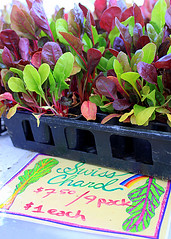 The Amherst Farmers’ Market and Sustainability Festival takes place this Saturday, April 26th, on the Town Common. Pick up your starter plants and locally grown foods from the Market, and then head to the Common for a fabulous family-friendly festival featuring all things sustainable… including Hilltown Families! Stop by our tent where kids can plant seeds to take home with them while parents can learn about the mission of Hilltown Families.
With springtime comes an increase in our awareness of the natural world – as we plan our gardens and watch trees begin to leaf out, we’re reminded of how essential the earth is to us, and how important it is to live our lives in a way that ensures that our natural resources will be preserved for years to come. Celebrate springtime, sustainability, and all things green at the Amherst Sustainability Festival
View original post 490 more words
Over 25 Walking Tours Support Community-Based Education in Western MA
Learn About Western Massachusetts Communities & History on Foot with Self-Guided Walking Tours!
 We’re rich in walking tours here in western Massachusetts, an excellent community-based educational learning activity families can do together. Unlike scheduled tours guided by interpreters, self-guided walking tours offer lots of flexibility. Families can use walking tours as a way to expand on a subject that children learn about in school. Alternately, families can utilize available tours as a means of answering questions that they’ve stumbled upon together.
Spring is here! Alongside the longer days and afternoons filled with sunlight comes warmer weather, and as the out-of-doors draws us from our winter hibernation, each day brings opportunities to explore our community. All over western Massachusetts, community organizations have organized self-guided walking tours, helping to add a new layer to the discoveries made while meandering through a neighborhood or district. Using paper maps and brochures, as well…
View original post 1,125 more words
How BP turned a whole community into an endangered species
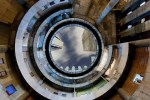
Jawdropping views of cozy homes built in an abandoned office tower, a lagoon, a recycling heap and more
The Origin of Painting
reading about the shadow ….and in some interpretations, the origins of picture making.

As a follow-up to the below post, I thought it useful to expand a bit on Pliny the Elder’s account of the origin of painting. In his Natural History (circa 77-79AD), Pliny attempts to make the compendium of information for his time. In Books XXXIV and XXXV, he discusses metallurgy, sculpture, and painting.
In Chapter 5 of Book XXXV, he writes, “We have no certain knowledge as to the commencement of the art of painting, nor does this enquiry fall under our consideration. The Egyptians assert that it was invented among themselves, six thousand years before it passed into Greece; a vain boast, it is very evident. As to the Greeks, some say that it was invented at Sicyon, others at Corinth; but they all agree that it originated in tracing lines round the human shadow […omnes umbra hominis lineis circumducta].“
Later, in Chapter 15, he tells the now-famous story…
View original post 977 more words
Exhibition | French Paintings from the Wadsworth Atheneum
preparing for visit here with friends in town
Textile Exhibit Celebrates Muslim Female Identity
Textile Exhibit Celebrates Muslim Female Identity
Westfield State University through April 5th, 2014
 Westfield State University’s Arno Maris Gallery presents “Threads that Bind,” a Middle Eastern textile exhibit, which will be on display until April 5. A reception will be held on Thursday March 27 from 5:30-8 p.m. with exhibit curator Dr. Christina Swaidan, associate professor of art history at Westfield State. This exhibition inspires further discussion both about textile and fabric arts as well as Muslim culture and the representation and daily lives of Islamic women. See our discussion questionsfor ideas to spark conversation with your kids and/or students.
The Arno Maris Gallery at Westfield State University invites you and your family to its current exhibition, Threads that Bind. This display of Middle Eastern textiles highlights items of Muslim women’s clothing such as the abaya, an all-purpose robe-like dress that is worn both to Mosque and while…
View original post 518 more words
reading, then writing
Devenir violon
making a violin from maple wood

David Van Zandt est luthier. un métier qui tend à disparaitre à l’ère du numérique. Pourtant, regardez-le faire, et comment, en 8 semaines, le bois devient musique…

