Hetty Startup's blog

working to enrich place-based learning


Leave a comment

The Best Thomas Hardy Novels

InterestingLiterature's avatarInteresting Literature

Thomas Hardy (1840-1928) wrote 14 novels, so picking a top ten won’t prove too difficult a task. What are the best Thomas Hardy novels? This is undoubtedly going to prove a difficult and controversial issue, but we thought we’d take this chance to select the ten we think are worth reading – and we’ve even ranked the novels in order (and the order, too, is bound to prove controversial). Do you agree with our ordering and general choices? We’ve included some interesting facts about the novels in each description of the novel.

10. Under the Greenwood Tree (1872). Hardy adopted an overtly pastoral title for this, his second published novel. His first, Desperate Remedies (1871), was an example of sensation fiction (a genre more usually identified with Mary Elizabeth Braddon and Wilkie Collins). It didn’t fare particularly well, so Hardy took the title of his next book from a song…

View original post 1,156 more words


Leave a comment

Cirques

Jimidi's avatarL'autre carnet de Jimidi

Cirques - cirque d'Abeville - carte postale d'époque

Il semble que les cirques aient d’abord été « en dur » avant de devenir itinérants. En Europe du moins. On pourrait voir là un rare exemple de sédentaires devenus nomades, mais non. C’est juste qu’avant, les artistes bougeaient sans emporter leurs chapiteaux, puisqu’il y en avait, prêts à les accueillir, un peu partout.

 Cirques - Cirque de Reims - extérieurCirques - Cirque de Reims - intérieur

Le cirque de Reims. C’est l’un des derniers cirques en dur construit en 1865, celui-ci le fut par Narcisse Brunette et accueillait déjà maint spectacle comme de la boxe mais aussi des réunions publiques.

Restauré en 1984, il fut aménagé en 1990 pour devenir la salle multi-activités d’aujourd’hui.

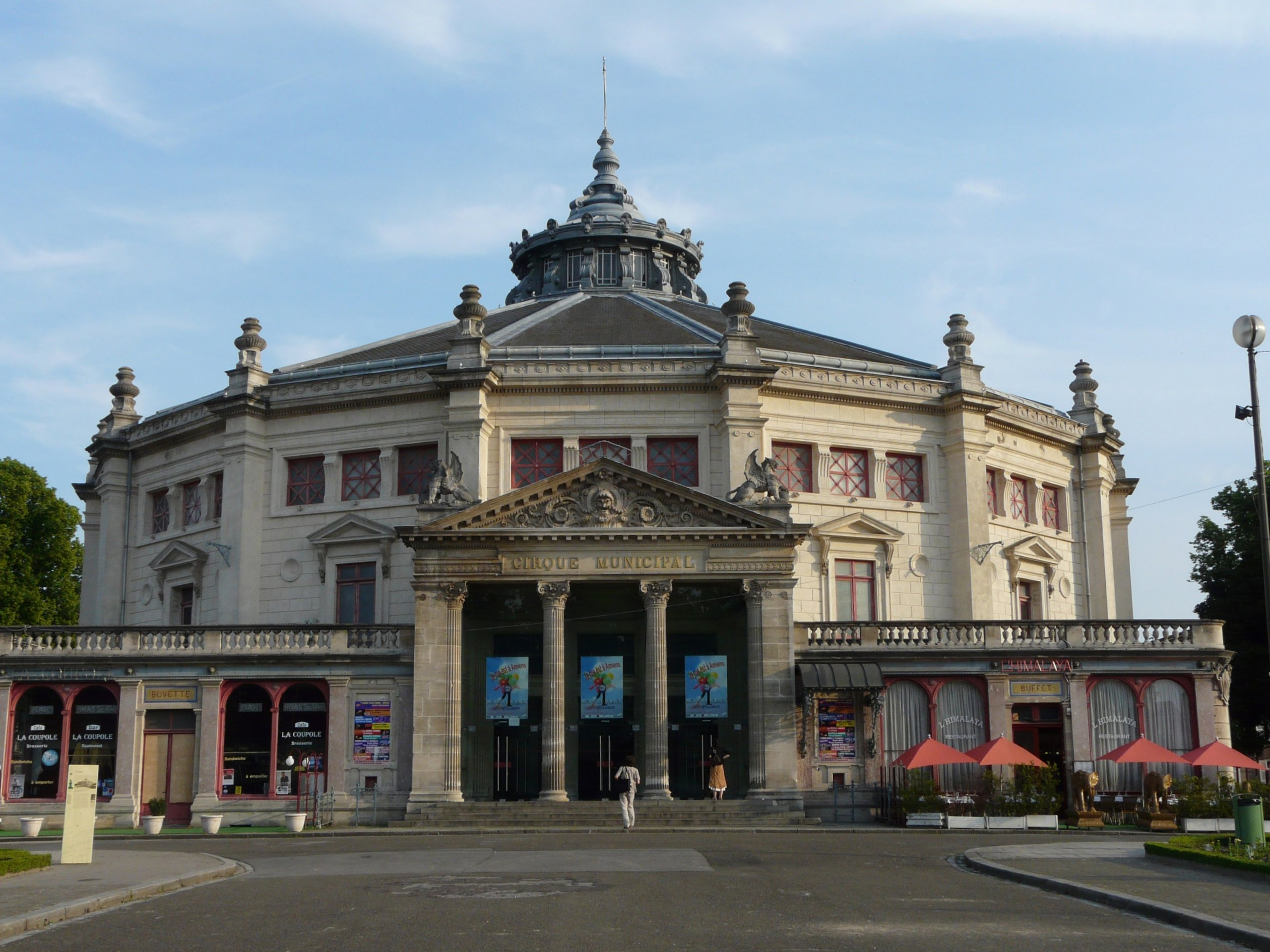
 Cirques - Cirque Jules Vernes - Amiens - Photo 03Cirques - Cirque Jules Vernes - Amiens - Photo 02Cirques - Cirque Jules Vernes - Amiens - Photo 01

Le cirque Jules Vernes d’Amiens

Le Cirque Jules-Verne est situé place Longueville à Amiens. Construit en 1889 par l’architecte Émile Ricquier, il portait le nom de Cirque municipal d’Amiens jusqu’en 2003.

Le Cirque Jules-Verne fait l’objet d’une inscription au titre des monuments historiques depuis le 29 octobre 1975 pour ses façades et toitures.

 Cirques - Cirkus - Copenhague - Photo 02Cirques - Cirkus - Copenhague - Photo 01

Le « Cirkus » de Copenhague

Construit entre 1885 et 1886…

View original post 131 more words


Leave a comment

poche’ – architect’s glossary

mgerwing's avatar

Pronounced with an exaggerated accent on the final “e”, “poche'” is a French architectural term for the all the stuff that is inside the walls between spaces.  In architectural drawings, it is the stuff blackened in on the plans.

For typical construction where all the walls are about the same thickness and both sides run parallel to each other, poche’ isn’t really a design element.  However, back in the days of predominantly stone masonry buildings, the thickness of stone walls gave them a relative presence that allowed for their manipulation as architectural entities.

The simplest treatment of poche’ and the base cause of the terms use is when architects describe carving into a wall to create a niche.  In those cases they may describe using the poche’ space of the building.  In a sense, it is carving into the “solid” mass of the wall space even though in modern construction…

View original post 59 more words


Leave a comment

In which the kids are fine, shut up

Luther M. Siler's avatarWelcome to infinitefreetime dot com

A note, before I start: I had to do research and learn what the hell the difference is between Holland, the Netherlands and Denmark before writing this post.  So obviously I am supposed to be writing right now.

Anyway.  This picture’s making the rounds:

tumblr_ngp1r0FJEa1qz6f9yo1_1280Here’s what you’re supposed to do: you’re supposed to look at this picture and go arr wharglebargle kids these days yarr, and be all mad.  In case you don’t recognize it, that painting on the wall back there is Rembrandt’s The Night Watch, which isn’t actually called that officially but whatever.  The idea is that these kids– who look, to my eyes, to be maybe eighth- or ninth-graders, are in the presence of Priceless! Artwork! and instead of reverently gazing upon it they are daring to look at their phones.  Horror!  Terror! Decline of society!  Wharrgarbl!  Facebook is so angry about this, guys.

View original post 851 more words